Sitting at the tip of a sweeping shingle spit on the Hampshire coast, Hurst Castle is one of the most dramatic and distinctive historic sites in the country.
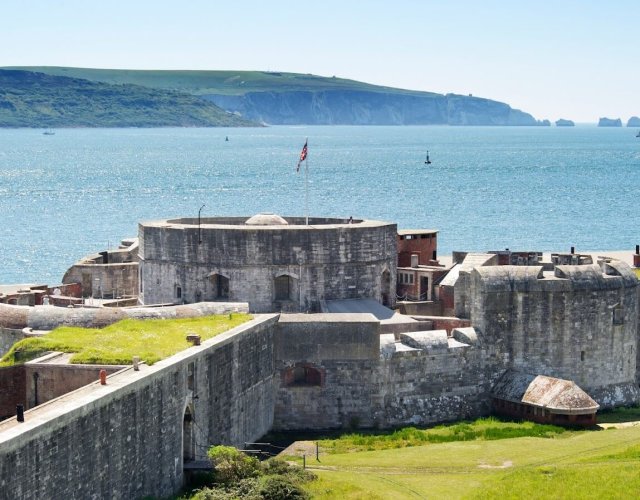
Perched dramatically at the end of a long shingle spit on the Hampshire coast, Hurst Castle is one of the most unique historic sites in the UK. Combining Tudor origins with Victorian military expansion and wartime history, it offers visitors far more than just a castle; it delivers a journey through centuries of coastal defence.
Reaching Hurst Castle is part of the experience itself, whether you choose to walk across Hurst Spit or take the scenic ferry from Keyhaven. Once there, you’re rewarded with sweeping views across the Solent, the Isle of Wight, and the famous Needles.
This guide covers everything you need to know before visiting, including its history, how to get there, ticket options, facilities, and what to expect when you arrive.
Note: Hurst Castle closes for the winter season from early November through late March. During this period, the castle, lighthouse, and ferries are completely closed to visitors.

Hurst Castle is located at the very end of Hurst Spit, a natural shingle bank on the south coast of England in Hampshire, near Milford on Sea. The spit stretches out from the edge of the New Forest coastline towards the Solent, placing the castle directly opposite the Isle of Wight.
Its remote coastal position was chosen for strategic defence purposes, giving clear sightlines across one of the busiest maritime routes in England.
Hurst Castle was originally built in 1544 during the reign of Henry VIII as part of a network of coastal fortifications known as Device Forts. Its purpose was to defend England against potential invasion from France and the Holy Roman Empire.
The castle has evolved significantly over time. The original Tudor structure formed the core of the fort, but in the 19th century, it was massively expanded with large Victorian wings designed to house heavy artillery. These additions reflected the growing importance of coastal defence during a period of rapid naval development.
Hurst Castle also played a role in some of England’s most significant historical events. During the English Civil War, it was captured by Parliamentarian forces, and in 1648 it famously held King Charles I prisoner briefly before his execution.
The castle remained in military use through both World Wars, continuing its defensive role until 1956. Today, it is preserved as a historic attraction, allowing visitors to explore nearly 500 years of military history in one location.

Getting to Hurst Castle is all part of the experience, as its unique location at the end of Hurst Spit means there is no direct road access. Instead, visitors can choose between a scenic walk along the shingle spit or a short ferry ride from Keyhaven, both offering very different but equally memorable ways to reach the castle.
Whichever option you choose, the journey gives you a real sense of the castle’s isolated coastal setting and its historic role guarding the entrance to the Solent.

The Hurst Castle Ferry runs from Keyhaven Harbour and provides a popular and scenic way to reach the castle.
The short boat journey crosses the sheltered waters around the spit and offers excellent views of the surrounding coastline and wildlife.
Tickets can be purchased on the day, so no need to book ahead. The timetable is seasonal and dependent on weather, tide times and passenger numbers, but generally runs on a regular schedule. The boat has a cover for bad or windy weather, but the journey is nearly always flat and calm because you’re travelling up the eastern side in the lagoon next to the spit and not the rougher side of the Spit to the west.

You can walk to Hurst Castle along Hurst Spit. The walk is approximately two miles each way and follows a shingle path that runs directly along the coast.
The shingle surface is uneven, so it is advisable to wear sturdy walking shoes. Many visitors choose to walk one way and return by ferry to enjoy both experiences.
No, you cannot drive to Hurst Castle. There is no road access to the site, and vehicles are not permitted.
Visitors must park in either Milford on Sea or Keyhaven, both of which provide access points to the spit.
We recommend parking in Keyhaven public car park (opposite the Gun Inn. Postcode SO41 0TP). From there, you can continue your journey on foot or by ferry.

Hurst Castle is a large and complex fort made up of multiple sections that reflect its long history of military use.
At its heart is the original Tudor keep, built in the 16th century. This sits alongside extensive Victorian artillery wings, which were added when the castle was modernised in the 1800s. These later additions are significantly larger and give the castle its striking, sprawling appearance.
Inside the castle, visitors can explore gun emplacements, barrack rooms, exhibitions, and narrow passageways that reveal how the site evolved over time. Outside, the open ramparts offer uninterrupted views across the Solent and towards the Isle of Wight.

There is plenty to explore once you arrive, and most visitors spend a few hours wandering the site.
One of the highlights is the Tudor keep, where you can climb through historic rooms and staircases while learning about the castle’s earliest origins. The upper levels reward visitors with panoramic coastal views.
The Victorian wings are equally impressive, showcasing the scale of 19th-century military engineering. These areas include large gun platforms and defensive positions designed to protect the Solent from naval attack. Two of the huge 38-ton guns installed in the 1870’s can be viewed in their massive casemates.
Beyond the structure itself, the castle’s location offers some of the best coastal views in the region. On a clear day, you can see across to the Isle of Wight, the Needles, and passing ships navigating the busy shipping channel.
Due to its remote location, facilities at Hurst Castle are limited but sufficient for a day visit.
There is a small kiosk offering hot drinks, cold drinks, snacks, and light refreshments. This is located near the entrance area on the spit. Visitors are also welcome to bring their own food and enjoy a picnic in the surrounding open space.
Toilets are available near the entrance, and there is also a small gift shop selling souvenirs and historical items.
It is worth noting that there are no full restaurant facilities on site, so planning ahead is recommended.
Dogs are very welcome at Hurst Castle, making this an ideal place for a dog friendly day out in the New Forest. Dogs are allowed in all areas of the castle and can even ride for free on the Hurst Castle ferry. At the castle, dogs must be kept on a short lead at all times.
Tickets for Hurst Castle can be purchased on arrival and do not usually require advance booking.
Adult tickets are £9.50, while children’s tickets are £6.50. Family tickets are also available, and children under 5 may enter for free. Members of English Heritage receive free entry.
The ferry is priced separately and is not included in the castle admission fee. Return tickets are usually available at the harbour, with discounted rates for children and free travel for infants in many cases.

Visiting Hurst Castle is most enjoyable when you plan ahead. The terrain along the spit is uneven, so suitable footwear is essential, especially if walking.
It is also important to check ferry times and weather conditions before travelling, as services can be affected by tides and coastal conditions.
Allow at least two to three hours to explore the castle itself, and longer if you are walking both ways along the spit. Bringing water and snacks is recommended, particularly during warmer months.
Hurst Castle offers a rare combination of history, scenery, and adventure. From its Tudor foundations to its Victorian gun batteries, it tells the story of England’s coastal defence across nearly five centuries.
Whether you arrive by ferry or on foot across the shingle spit, the journey to the castle is just as memorable as the destination itself. With its dramatic setting and rich history, Hurst Castle remains one of the most distinctive and rewarding days out on the south coast. If you’d like to visit, one of our Milford on Sea cottages makes the perfect base for adventures in this part of the New Forest and beyond!